How I Sold ₹3,400 Worth of Surplus Components Without Going to SP Road
The components sitting in my drawers weren't junk. They were just waiting for the right maker.
Every maker has this problem. You buy in bulk because unit economics make individual purchases stupid, and then you sit on eight months of surplus. That drawer of unused 28BYJ-48 stepper motors and ULN2003 driver boards isn't coming from a failed project — it's from the math of responsible purchasing.
After finishing a major automation project last year, I had a serious accounting conversation with myself. I had roughly ₹8,000 worth of components (purchase price) that I had no planned use for. Some of it would be useful again. Some of it I'd probably never use. The question was what to do about the second category.
The Options I Had
Keeping everything was the path of least resistance and least value. Selling on OLX or Facebook Marketplace worked in theory but felt like the wrong audience — people looking for household electronics, not makers who understand what a ULN2003 is.
SP Road shops don't buy back components. You could try, but the used electronics economy for maker components is one-way. Once you've bought from a distributor, the return path essentially doesn't exist at any reasonable price.
Used maker components have zero value to non-makers and high value to the right maker. The gap is findability.
Listing on the Component Map
I tried the RoboDIB component map as an experiment. I listed about 15 items — groups of similar components, not individual parts. Stepper motors together, motor drivers together, a bundle of assorted sensors, some NodeMCU boards.
Priced everything at 60–70% of current market rate (fair for used/tested components) and listed my area as BTM with pickup preferred.
- First inquiry within 6 hours — someone in Koramangala wanted the stepper motors
- Three more inquiries in the first week
- Sold 11 of 15 listings within two weeks
- Two trades happened instead of sales — exchanged some sensors for a TTGO board I actually needed
What Worked and What Didn't
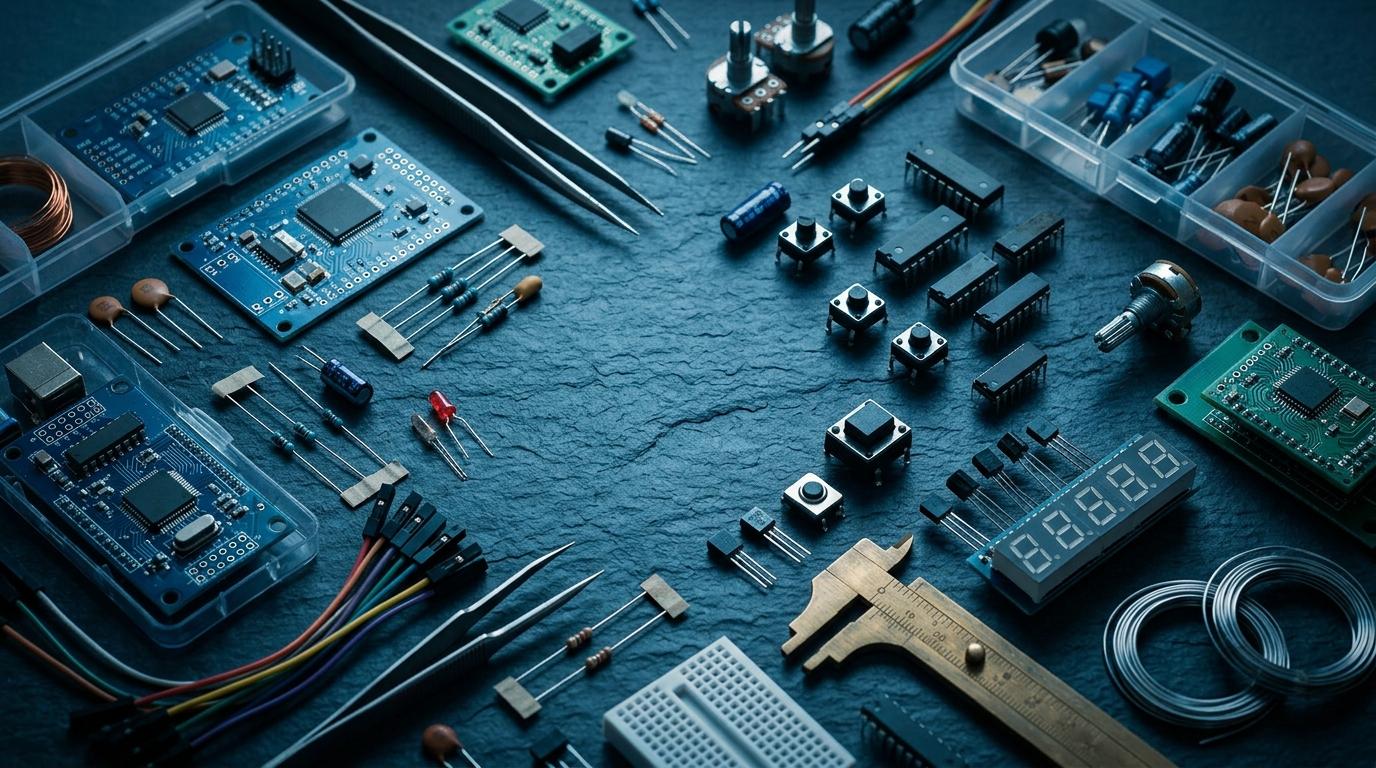
The most popular listings were development boards and assembled modules. Loose passives (resistors, capacitors) were harder to move — people are more comfortable buying those new from a distributor because the price difference isn't significant enough to justify second-hand.
Good photos mattered a lot. Listings with clear photos of the actual components got three times more inquiries than my text-only listings. This isn't surprising in retrospect — buying second-hand components means trusting the condition, and photos establish that faster than any description.
The Component That Surprised Me
My oldest listing — four HC-SR04 ultrasonic sensors I thought nobody would want because they're so cheap — sold within three days. The buyer was a teacher setting up a school robotics lab and needed them for a demonstration tomorrow morning. Market rates would have taken two days to arrive. I was ten minutes away.
Turn your surplus into someone's solution
List your spare components on the map. Connect with makers near you. Turn drawer clutter into cash or useful trades.
More from the blog
RoboDIB
Solve these problems yourself
AI inventory, component map, 3D printing, and circuit design tools — all built for India's maker community.