Why India Needs a Maker-to-Maker Component Network (Not Just More Distributors)
The distribution problem in Indian maker electronics is real — and it's not solved by adding another online store.
I've been building electronics projects in India for seven years. In that time I've watched the online components market improve dramatically — Robu, Evelta, Inventrom, and others are genuinely good now, with decent stock and reasonable delivery times. But there's a category of problem that better distributors can't solve.
The Problem Distributors Can't Fix
Distributors stock popular items in volume. They have to — their economics require turnover. This means they're excellent for ESP32s and 10K resistors and DHT11 sensors. They're poor for anything obscure, anything end-of-life, anything that a specific community uses but the mass market doesn't.
I once spent two weeks trying to source a specific IMU sensor for a drone build. The sensor was well-known in the FPV community but not mass-market. No Indian distributor had it. International shipping took seventeen days plus customs. Meanwhile, three other people in the Bangalore maker community had exactly that sensor sitting in their stock — we just had no way to find each other.
The collective inventory of the Indian maker community is enormous. The problem is discoverability, not supply.
What the Maker Network Already Does
This informal network already exists. Telegram groups, Facebook communities, Reddit threads — makers have been trading components for years. Someone posts 'does anyone have X in Bangalore,' gets five replies, a trade happens. It works, but it's slow, context-dependent, and doesn't scale.
Every trade of this type requires the right person to see the right post at the right time. It's search by broadcasting, which is inefficient by definition. A structured marketplace changes this to search by query — you look for what you need instead of hoping the right person is watching when you ask.
The Economics Make Sense For Both Sides
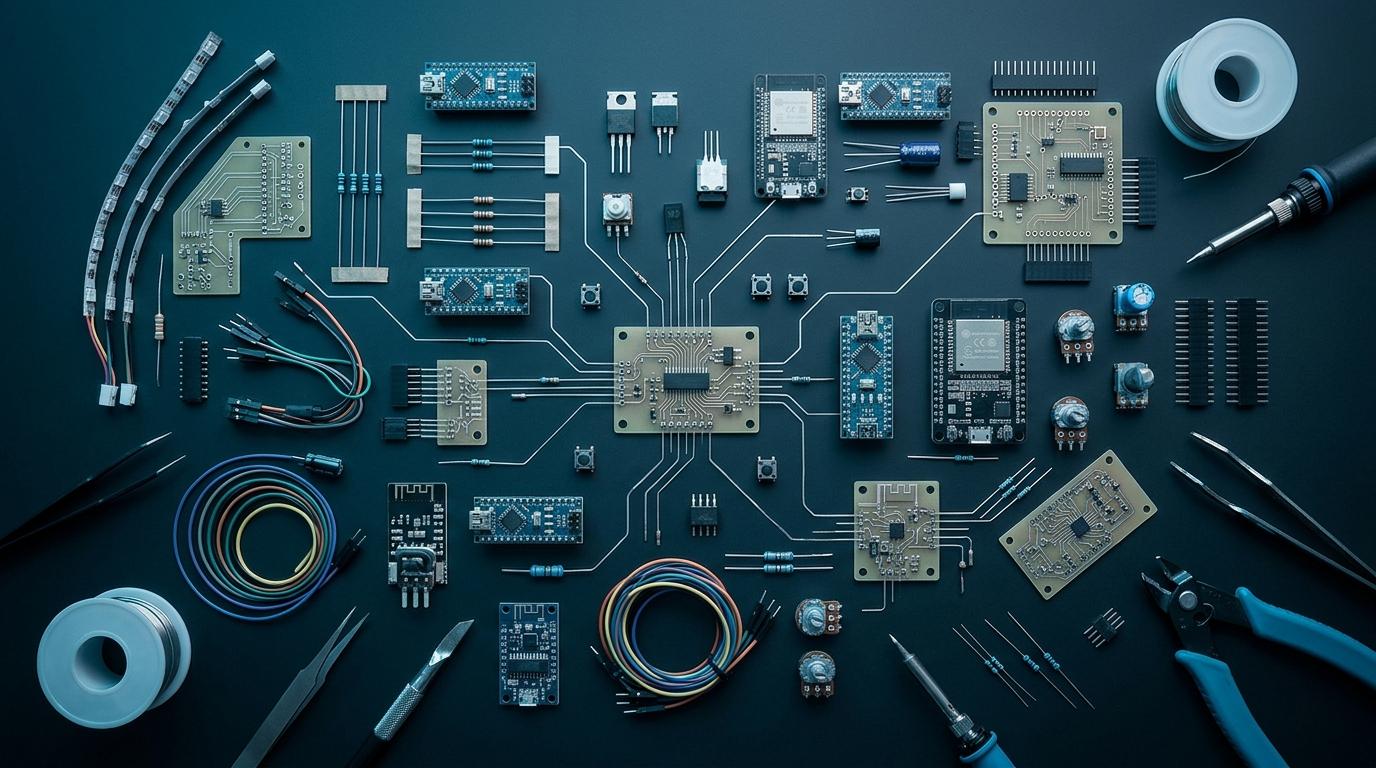
Buyers get: faster access to obscure parts, same-day availability for common parts, below-market prices on well-maintained surplus, and connection to other makers who might become collaborators.
Sellers get: recovery of value from surplus, cleared bench space, and — importantly — trading opportunities rather than cash transactions. 'I'll give you these sensors for whatever you have that I need' is a conversation that's impossible with a distributor but natural between makers.
- Access to end-of-life and obscure components unavailable from distributors
- Same-day sourcing without SP Road logistics
- Fair prices on surplus — below market for buyer, above-zero for seller
- P2P trading and component swaps that distributors can't offer
- Local connections to the maker community
What Needs to Exist
A P2P component marketplace needs a few things to work: location-aware search so you can find what's near you, enough density of listings to make searching worthwhile, and enough trust infrastructure that buyers feel confident in what they're getting.
The RoboDIB component map is building this. It's early, the listing density is growing, but the concept is sound. If you're a maker with surplus components and you're not listing them, you're making the network worse for everyone — including yourself the next time you need something obscure.
Join India's maker component network
List your surplus. Find what you need. Build the inventory commons that all of us need.
More from the blog
RoboDIB
Solve these problems yourself
AI inventory, component map, 3D printing, and circuit design tools — all built for India's maker community.