How AI Inventory Saved My Robotics Project From a Week of Chaos
I almost scrapped a working prototype because I couldn't find a single capacitor. Then I stopped managing parts in my head.
My bench looked like an electronics graveyard. I had four breadboards in various states of mid-project, three zip-lock bags of capacitors with no labeling, and somewhere in that mess — a 100µF electrolytic that I was completely certain I had bought two months ago. I tore through every drawer. Nothing.
So I ordered new ones. The next day I found a full strip of them inside an old tea box I was using as a component holder. I'm a senior robotics engineer. I've been doing this for nine years. And I was storing capacitors in a chai box.
The Real Cost of Bad Inventory
We talk about component costs in rupees. But the actual cost is time. I started tracking how much I was losing — 20 minutes here searching, 45 minutes there waiting for a delivery on a part I owned. It adds up fast. In one month I calculated I'd lost nearly six hours to this problem.
That's not a component problem. That's an inventory problem.
The component isn't missing. You just don't know where it is — and that's a different problem entirely.
What I Changed
I started using RoboDIB's AI inventory tool after a friend at a Bangalore makerspace mentioned it. The part I was skeptical about: data entry. I assumed it would take me longer to catalog things than to just search by hand.
The AI parsing feature surprised me. I photographed my component trays and described what was in them in plain text. The system parsed it into structured entries automatically. I didn't type a single component name manually — I just described what I was looking at.
- Photographed and described my existing stock in one 90-minute session
- The AI extracted part names, quantities, and rough specs from my descriptions
- Every new purchase now takes about 30 seconds to add via voice or text
- I can search by description — 'small blue caps around 100uF' actually works
Three Months In
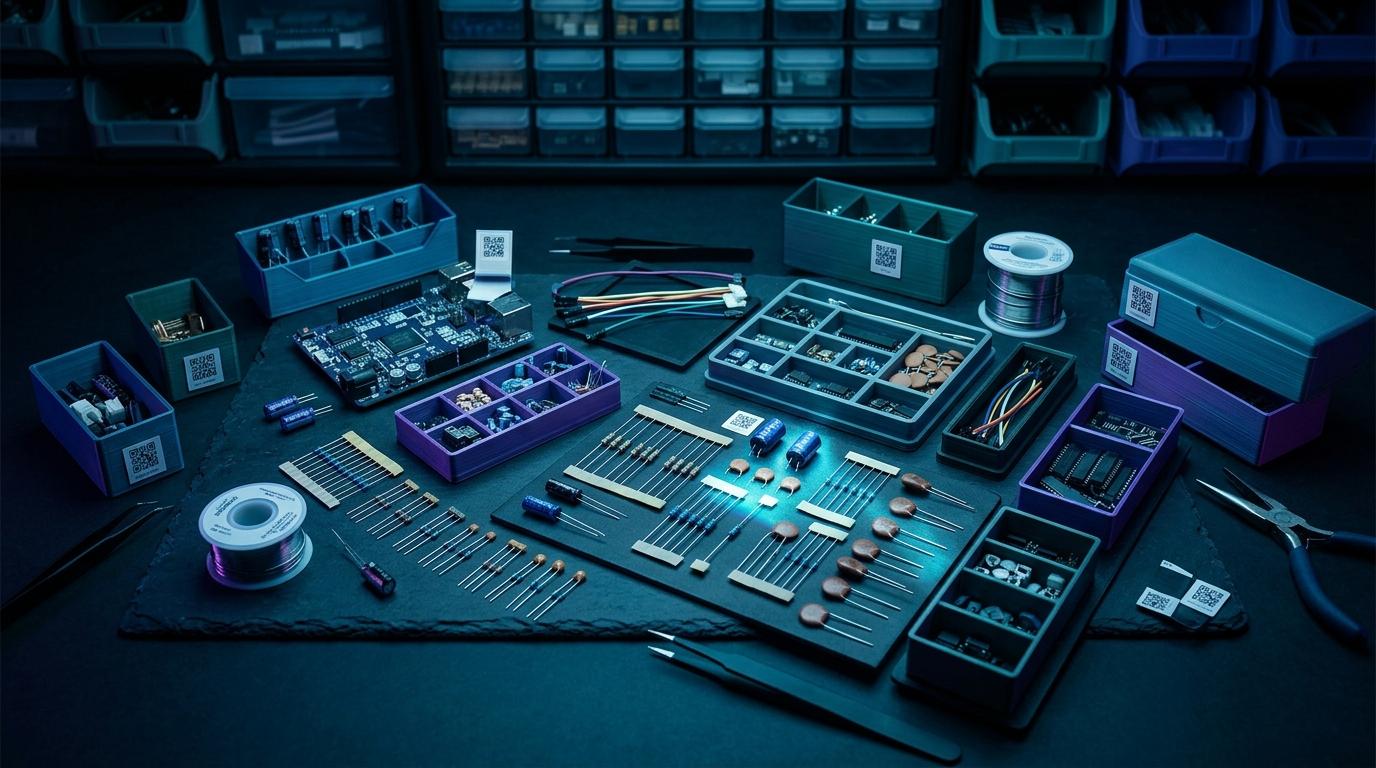
I haven't ordered a duplicate since. More importantly, my project planning changed. I now check inventory before buying anything. It sounds obvious. But when you don't have visibility into what you own, you default to just buying again because that's faster.
The system also tracks collection structure, so I can have separate inventories for different projects. When I finished the servo controller build, I moved those components into a 'completed project archive' collection instead of mixing them back into my main stock.
Who This Is For
If you have more than two drawers of components, you need inventory management. If you've ever ordered something you already owned, you need it even more. The setup investment is real — plan two hours to catalog a medium-sized bench. But you get that back in the first week.
Stop searching. Start building.
Track your components with AI-powered inventory — add parts by description, search by feel, never duplicate an order again.
More from the blog
RoboDIB
Solve these problems yourself
AI inventory, component map, 3D printing, and circuit design tools — all built for India's maker community.